Digital transformation for the Department of Education
Strategy to support the NSW Department of Education
Achievements
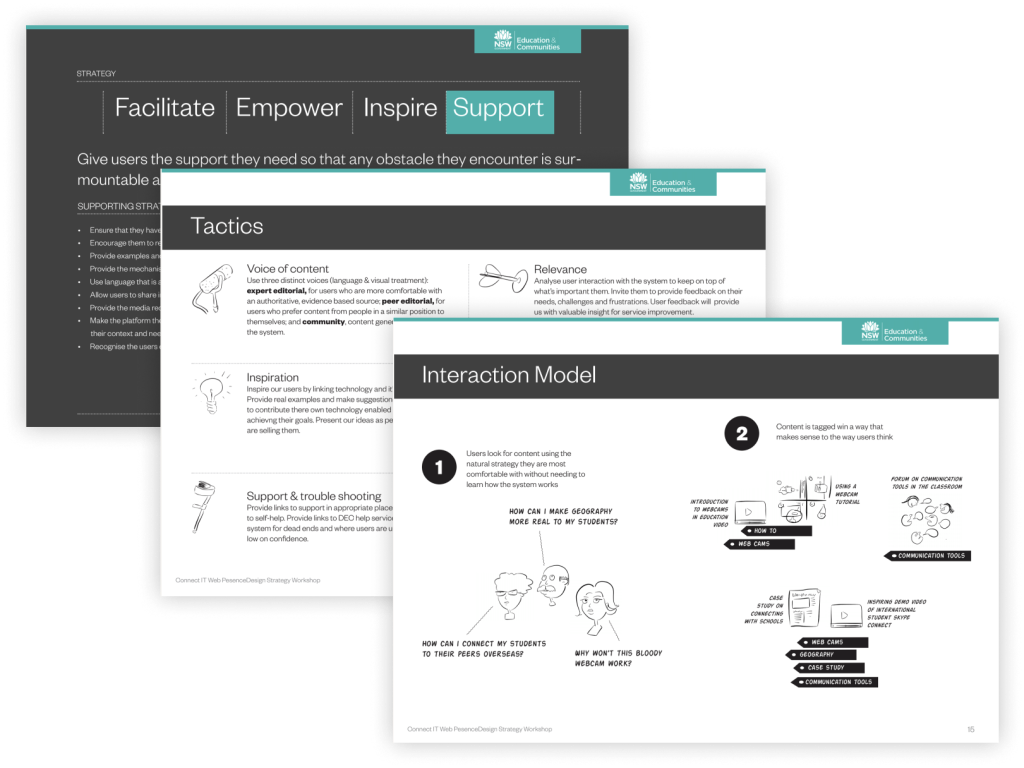
- 01Turning high level research findings into an ambitious but practical digital strategy
- 02Running stakeholder workshops to challenge assumptions and integrate research findings
- 03Developing practical tactics to translate our vision into deliverable outcomes
- 04Running co-design workshops with teachers to develop and challenge emerging strategies
The project
I was fortunate enough to work on a project for the NSW Department of Education (then called the Department of Education and Communities or DEC) that used research into the relationship between teachers and technology to identify how to support teachers to achieve better learning outcomes for their students. My engagement in the project began with designing and leading a series of stakeholder and teacher co-design workshops that:
• Identified and challenged existing assumptions against research findings
• Drilled down to identify the opportunities and barriers that teachers' relationships with technology presented
• Identified where technology was supporting learning outcomes and where it was inhibiting them
• Developed a vision for how the department could support their teachers to access and build confidence with that technology
• Identified and challenged existing assumptions against research findings
• Drilled down to identify the opportunities and barriers that teachers' relationships with technology presented
• Identified where technology was supporting learning outcomes and where it was inhibiting them
• Developed a vision for how the department could support their teachers to access and build confidence with that technology
Aligning on assumptions and evidence
The focus of the workshops was helping the DEC to map the existing assumptions they were making decisions from, and identifying which of these were speculative and which were based on evidence. This helped all of us to adjust our understanding of the problem to more closely align with the reality of the teachers we were supporting.
I used classic assumption mapping techniques, then led 'push in' and 'push out' sessions where we dug into what the assumptions were based on (pushing in), and what the consequence of the decisions based on those assumptions were (pushing out). From this workshop we developed a vision designed to help align our stakeholders and guide future decision making. This vision was then broken down into a series of practical steps.
I used classic assumption mapping techniques, then led 'push in' and 'push out' sessions where we dug into what the assumptions were based on (pushing in), and what the consequence of the decisions based on those assumptions were (pushing out). From this workshop we developed a vision designed to help align our stakeholders and guide future decision making. This vision was then broken down into a series of practical steps.
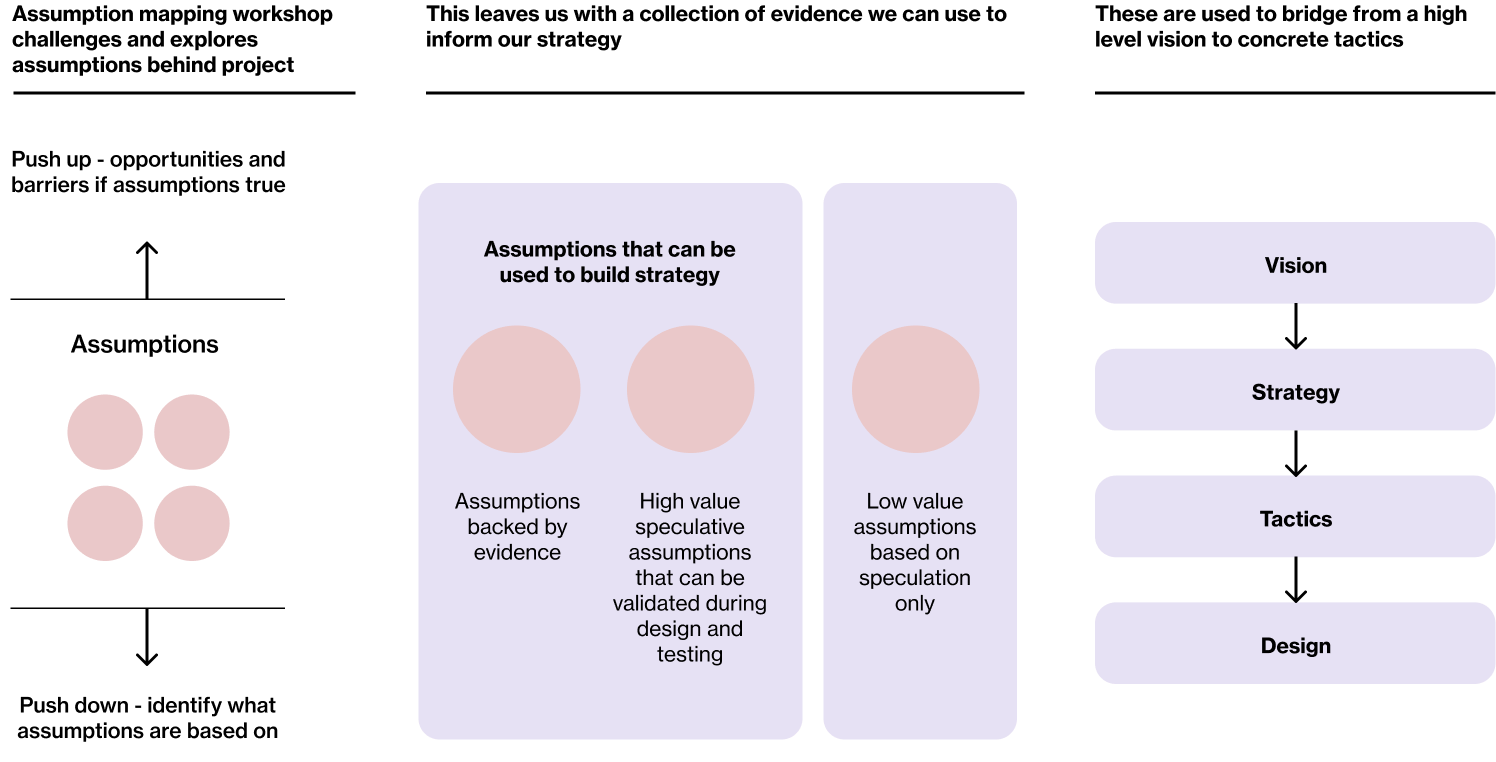
Part of the process used to define the design strategy for DEC.
From vision to action
We defined a hierarchy of missions, strategies, tactics, then concrete actions to realise each tactic. Each step was supported by the evidence gathered in the research and was framed so that stakeholders could understand which insights supported each step.
Using these methods we developed four guiding visions backed by evidence: Facilitate, Empower, Inspire, and Support. We developed multiple strategies and linked each strategy to the vision it supported, breaking those strategies down further to a set of pragmatic tactics to guide the design. For example 'voice' where we identify which of three tones of voice should be used depending on the user content, and 'Inspiration' where we provide authentic stories of teachers using technology.
This all served as a launching point for the detailed design work, leading naturally to the development of interaction models, IA design, wireframes and content design. This bridging from abstract vision to concrete action can be very challenging, so 'chunking down' while retaining links to the evidence and strategies was essential in keeping stakeholders and designers focused on user need when making decisions.
Using these methods we developed four guiding visions backed by evidence: Facilitate, Empower, Inspire, and Support. We developed multiple strategies and linked each strategy to the vision it supported, breaking those strategies down further to a set of pragmatic tactics to guide the design. For example 'voice' where we identify which of three tones of voice should be used depending on the user content, and 'Inspiration' where we provide authentic stories of teachers using technology.
This all served as a launching point for the detailed design work, leading naturally to the development of interaction models, IA design, wireframes and content design. This bridging from abstract vision to concrete action can be very challenging, so 'chunking down' while retaining links to the evidence and strategies was essential in keeping stakeholders and designers focused on user need when making decisions.
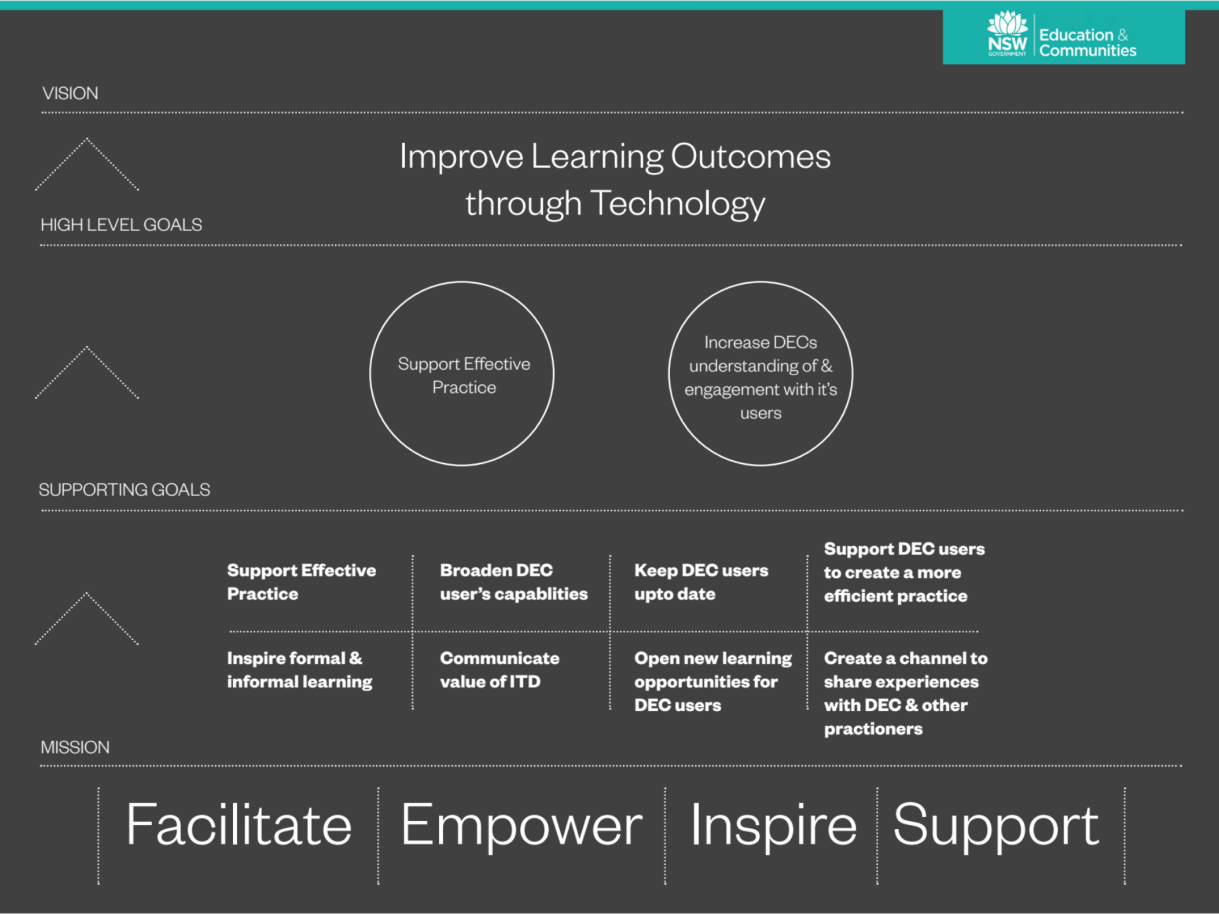
Extract from the strategy document.
I then led the UX design of two systems to support this strategy, the 'Connect.it' website to support teachers to improve their confidence with new technology, and the 'Software Catalogue', an app store for NSW schools to reduce barriers to discovering and using new software.