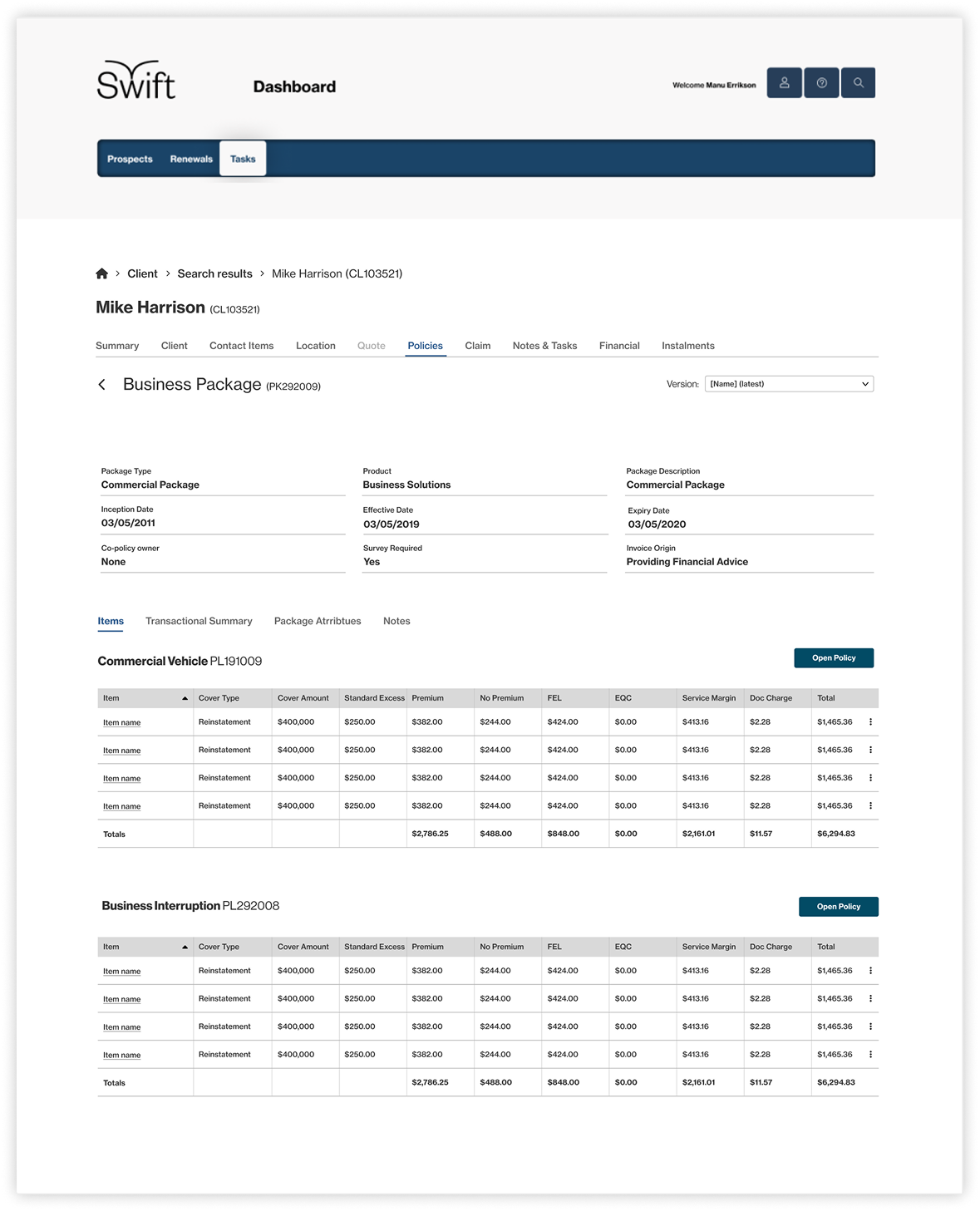
Bringing a legacy CRM into the 21st century
Using human centred design to uplift the user experience of a loved but creaking CRM.
Achievements
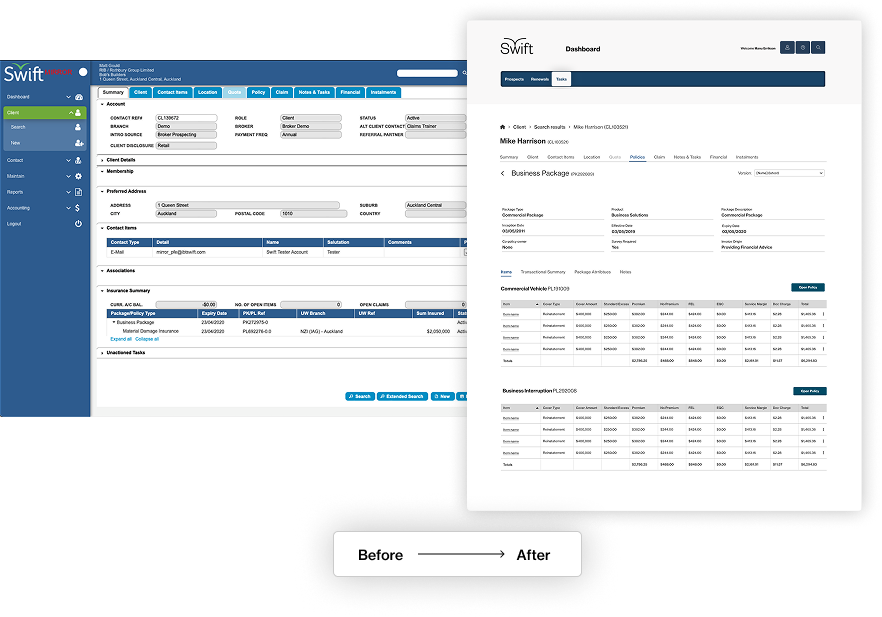
- 01Revitalised an aging system from the ground up
- 02Ran formative research to guide decision making and support stakeholders
- 03Ran workshops with stakeholders to define business problems and design strategy
- 04Redesigned full IA, universal design patterns, and specific flows
- 05Radically reduced the number of clicks, pop ups, and 'time to learn' for the system
- 06Created a sustainability strategy designed to guide iterative development
Rothbury
Rothbury are New Zealand's oldest independent insurance company and have a bespoke CRM and management system called 'Swift' that needed a technical architecture overhaul. They took this opportunity to engage my company Lushai to use human centred design to rethink the Swift user experience and provide a design approach to revitalise this ageing system.
Research
I designed and facilitated workshops with senior Rothbury stakeholders and project sponsors to identify internal assumptions that would need to be validated through research, identify their major user groups, and set scope and effort expectations for the project.
Based on this I designed a rapid research programme where I conducted interviews with a small sample of people from each user group, uncovering their goals, work contexts, current barriers and opportunities. We used the findings from this research to create a business case for redesigning the Information Architecture and UX for Swift to bring it into the modern age.
Based on this I designed a rapid research programme where I conducted interviews with a small sample of people from each user group, uncovering their goals, work contexts, current barriers and opportunities. We used the findings from this research to create a business case for redesigning the Information Architecture and UX for Swift to bring it into the modern age.
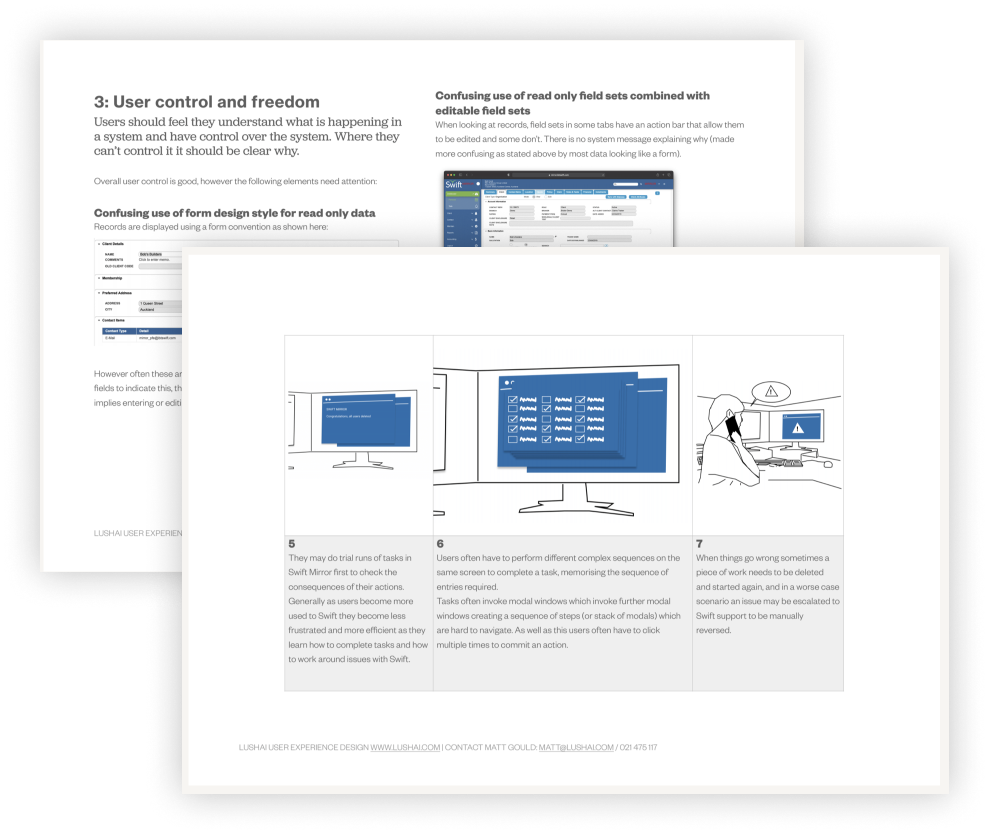
Extract from the initial research report.
Strategy and Design
I used the initial research to develop a series of design principles and an overall approach for the Swift revitalisation. Our UX team then worked with Swift subject matter and technical experts to develop a complete redesign of the Swift user experience. This went beyond uplifted UI treatments and touched every area, including redesigning flawed processes and using usability testing and iteration to simplify overly complex flows.
To ensure the integrity of the user experience would be maintained as the product grew, we also produced an interaction guide that documented our design principles and user contexts, as well as the design patterns we used, broken into modular components with guidance on how they should be used.
To ensure the integrity of the user experience would be maintained as the product grew, we also produced an interaction guide that documented our design principles and user contexts, as well as the design patterns we used, broken into modular components with guidance on how they should be used.
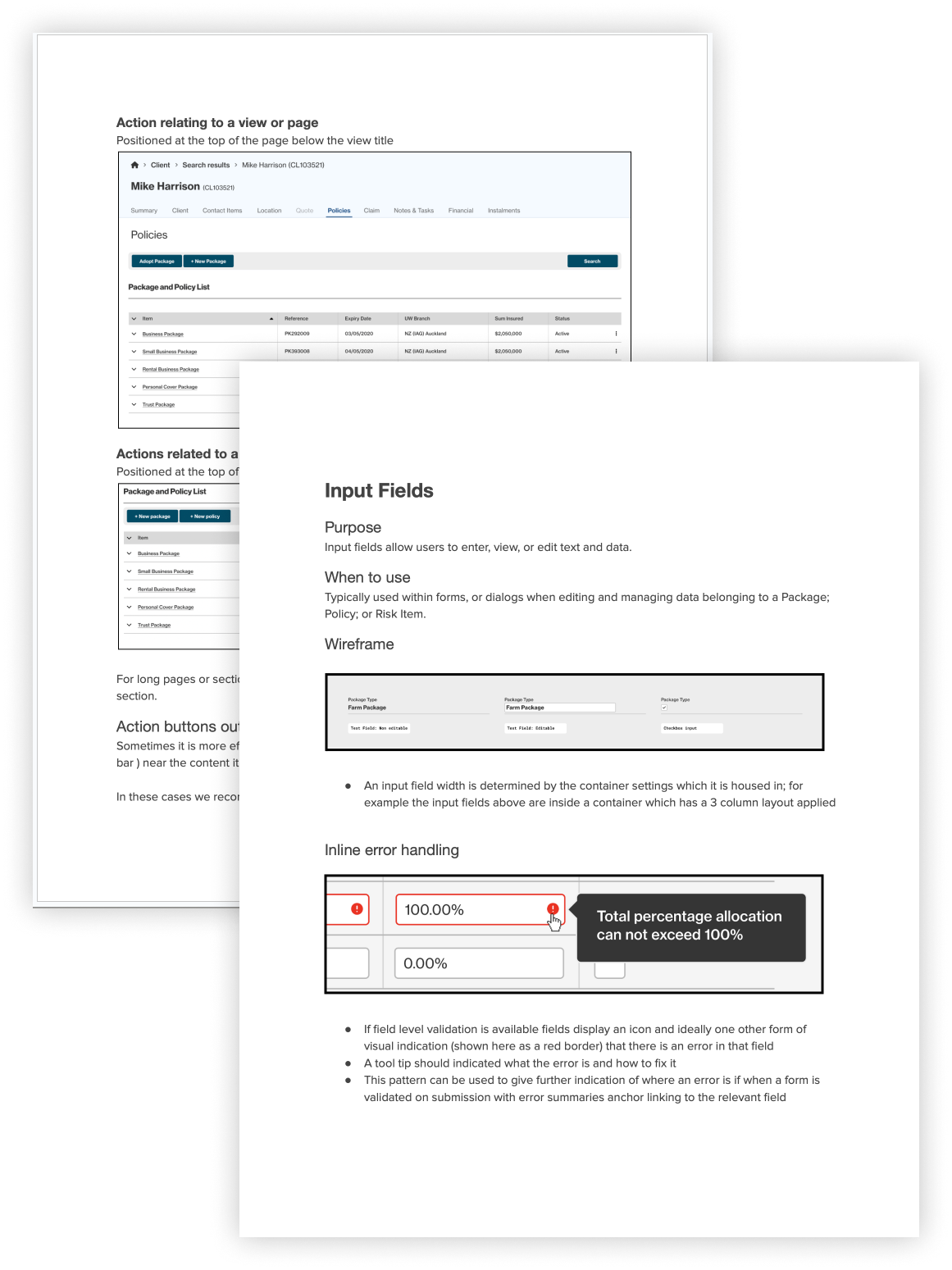
Extract from the design principles and implementation guide.